 Binaural
Delta, theta, alpha and beta explained
Brain activity is often grouped into bands by speed. Here is a simple map of the four main ones and how they relate to binaural beats.
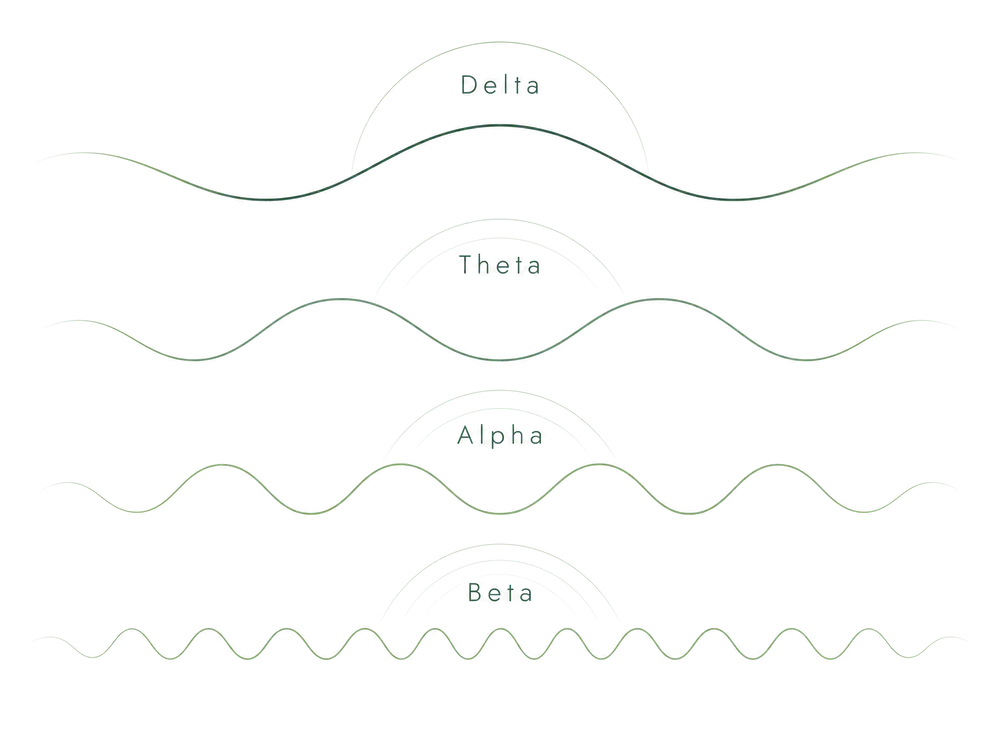
Delta (about 0.5–4 Hz)
The slowest rhythm, linked to deep sleep. Slow beats in this range are used for deep rest and winding down.
Theta (about 4–8 Hz)
Associated with drowsiness, daydreaming and light meditation. A gentle, introspective state.
Alpha (about 8–13 Hz)
A relaxed, awake state: eyes closed, calm, or easy focus. Popular for relaxation and steady attention.
Beta (about 13–30 Hz)
Active thinking and alertness. Low beta can support focus, but high beta is linked to tension, so calm programs stay mostly lower.
How Binaural Rewire uses them
The program moves through three cycles: Decompress (delta and theta), Focus (alpha and SMR) and Resilience (theta, alpha and low beta). See what each day does. New to the idea? Start with what binaural beats are.
Quick answers
Do brainwave bands have exact edges?
No. Different sources use slightly different ranges; treat them as approximate.
Is it proven that binaural beats change brainwaves?
Evidence is mixed; results vary from person to person.
Try it yourself
Day 1 of the 21-day Binaural Rewire program is free. Headphones on, ten minutes. Sign up and you will also be the first to know when the full program opens.
More guides
- What are binaural beats?
- Binaural beats for sleep and winding down
- Binaural beats for focus and deep work
- Binaural beats for stress and anxiety
- Binaural beats vs isochronic tones
- How long should you listen to binaural beats?
- Are binaural beats safe?
- Best headphones for binaural beats
- Do binaural beats work?
- The 21-day binaural beats program
By Gonçalo, audio producer and sound designer in Lisbon. Last updated 2026-11-16. This page is general information, not medical advice.