 Binaural
 beats vs isochronic tones
Both are used for relaxation and focus, and both rely on a steady rhythm. The difference is how that rhythm is made and whether you need headphones.
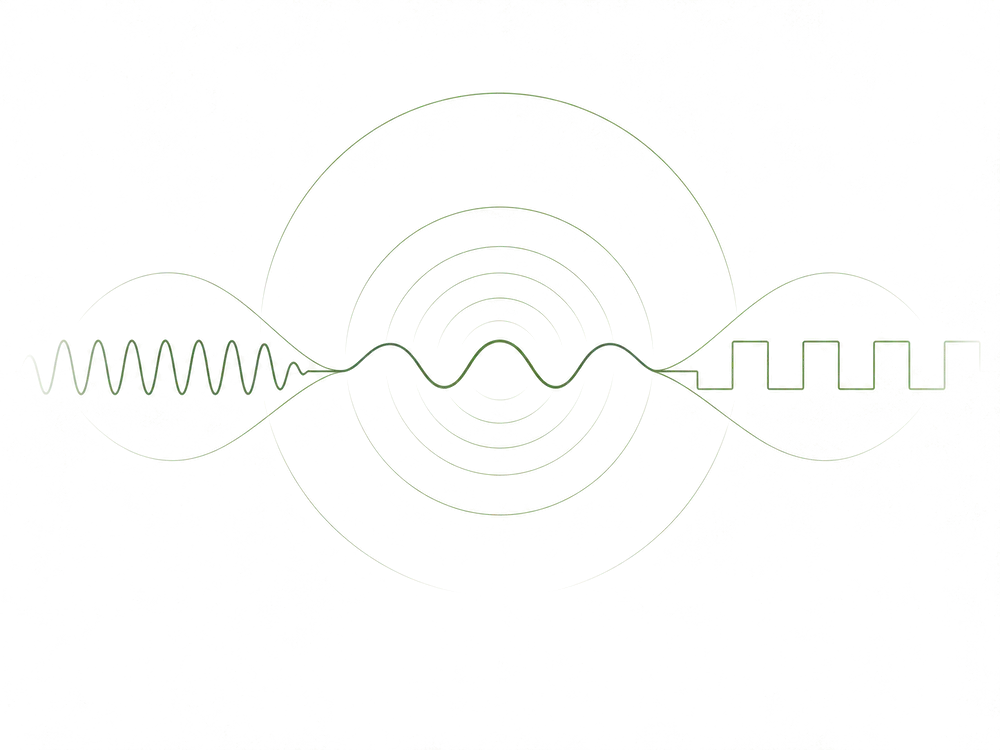
Binaural beats
Two slightly different steady tones, one in each ear. The brain perceives a slow beat at the difference between them. Headphones are essential, and the tones are smooth, so they blend easily into music. See what binaural beats are.
Isochronic tones
A single tone that is switched on and off at a regular rhythm, like a very regular pulse. Because the pulse is in the sound itself, it works through speakers too. The sharp on-off pulses can feel more intense and less relaxing for some people.
Which should you choose?
- Calm, gentle, easy to listen to: binaural beats, mixed with soft music.
- No headphones available: isochronic tones.
- Sensitive to pulsing sounds: binaural beats are usually softer.
What the research says
Both are studied, with small samples and mixed results, and no clear winner. Pick the one you find pleasant and keep it consistent. Binaural Rewire uses binaural beats under warm, slow music.
Quick answers
Do isochronic tones need headphones?
No. The pulse is in the sound itself, so speakers work.
Which is stronger?
Isochronic pulses are more noticeable, but stronger is not the same as better for relaxation.
Try it yourself
Day 1 of the 21-day Binaural Rewire program is free. Headphones on, ten minutes. Sign up and you will also be the first to know when the full program opens.
More guides
- What are binaural beats?
- Binaural beats for sleep and winding down
- Binaural beats for focus and deep work
- Binaural beats for stress and anxiety
- Delta, theta, alpha and beta explained
- How long should you listen to binaural beats?
- Are binaural beats safe?
- Best headphones for binaural beats
- Do binaural beats work?
- The 21-day binaural beats program
By Gonçalo, audio producer and sound designer in Lisbon. Last updated 2026-11-16. This page is general information, not medical advice.